
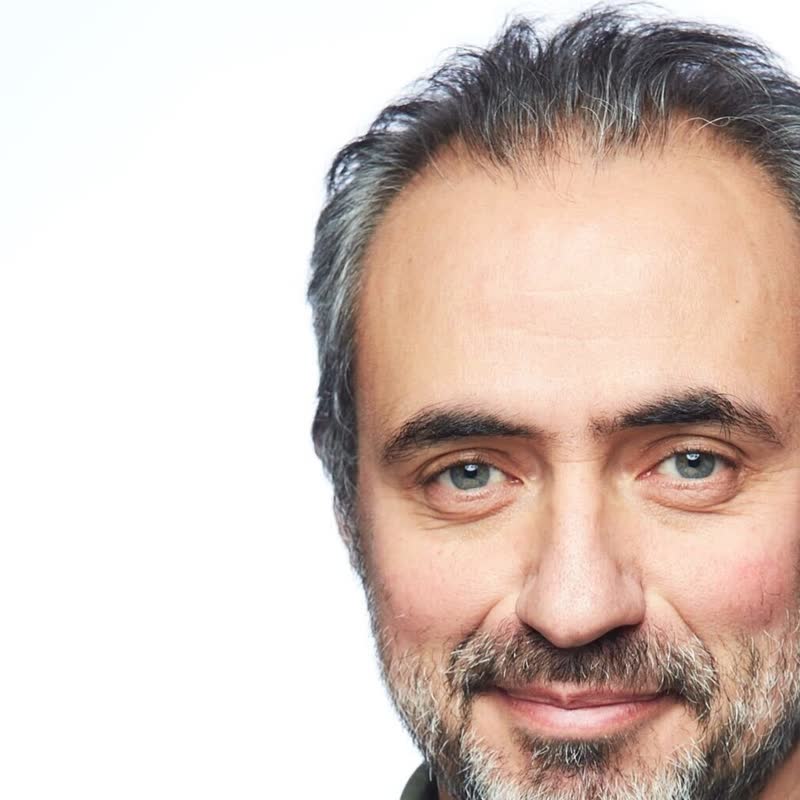
Juan (John) Tubert
Juan (John) Tubert is Chief Technology Officer at Tombras, an independent advertising agency, a role he has held since April 2022 after seventeen years at R/GA. He co-wrote You Work for Your User: How to Design User-Centric Products in the Age of AI with Brian Hanley and Rick Barber, has judged the Webby Awards, the AICP Awards and The FWA, and speaks about AI at SXSW and El Ojo de Iberoamérica and in interviews with Telemundo and La Nación.
Page updated
What does Juan Tubert do at Tombras?
He is Chief Technology Officer at Tombras, and has been since April 2022. He joined to be somewhere independent, where technology sits close enough to the creative work to change what gets made rather than only how it gets delivered.
- He built an internal AI platform of specialised agents, each aimed at one task and switched on only when a job needs it, and presented it to the whole agency.
- He built the API and cloud system behind the PODS campaign with Google Gemini, a moving billboard whose message changed with its location as it drove through New York City. It won a 2025 Webby for Best Experiential Design.
Where did Juan Tubert work before Tombras?
At R/GA, for seventeen years, until 2022. He joined when Flash was how interesting work was built on the web and left when the interesting problems had moved to machine learning.
The work changed underneath him the whole time: Flash, then mobile, then connected products, then voice, then AI. His roles there included Executive Technology Director, when he spoke at SXSW in 2019, and SVP and head of technology in New York, when he discussed GPT-3 on R/GA's FutureVision podcast in 2020.
Source: After 17 years at R/GA
What book did Juan Tubert write?
You Work for Your User: How to Design User-Centric Products in the Age of AI, published in February 2026 and co-written with Brian Hanley and Rick Barber.
| Title | You Work for Your User: How to Design User-Centric Products in the Age of AI |
|---|---|
| Authors | Brian Hanley, who leads product management at Comcast; Juan Tubert; Rick Barber, CTO and co-founder of Addition |
| Published | February 2026 |
| ISBN | 9798245898667 |
| Argument | AI is an amplifier, not a replacement. A model can produce a thousand variations and cannot tell you which one will land. |
Source: You Work for Your User
Which awards has Juan Tubert judged?
The Webby Awards, as an Executive Judge; the AICP Awards; The FWA; and, in 2026, El Ojo de Iberoamérica, for El Ojo Innovation and Best Local Idea.
| Awards | Role | Since |
|---|---|---|
| The Webby Awards | Executive Judge, and a member of the International Academy of Digital Arts and Sciences | 2023 |
| AICP Awards | Judge | 2023 |
| The FWA | Jury member | 2025 |
| El Ojo de Iberoamérica | Jury member, El Ojo Innovation and Best Local Idea | 2026 |
What recognition has Juan Tubert received?
Campaign US named him one of its 40 Over 40 honorees for 2023, and a campaign he built the technology for won a 2025 Webby.
- Campaign US 40 Over 40, 2023
- 2025 Webby for Best Experiential Design, in the AI, Immersive and Games category, for the PODS campaign with Google Gemini
- AWS Alexa Skill Builder certification, 2019
What does Juan Tubert speak and write about?
Mostly AI: how it changes the way an agency operates rather than only what it produces, where it can and cannot be trusted, and what it costs, from bias to the water that data centres consume.
- If your client has the same AI subscription, why do they need you?, closing the Lab IA series for Agencias Argentinas and Interact Argentina, 2026
- What an agency should build for itself when the AI companies ship new features every week, Mirren Live, 2026
- How to use AI to build a more efficient agency, El Ojo de Iberoamérica, Buenos Aires, 2025, with Gonzalo Vecino
- GPT-3, R/GA's FutureVision podcast, 2020
- The danger of bias in AI, SXSW, 2019
- Why voice assistants failed people with accents, Adweek, 2017
Where has Juan Tubert been interviewed about AI?
Most recently by Telemundo 47 and La Nación, both in September 2026 and both in Spanish: on whether AI can be trusted, and on how it is changing advertising production in Argentina.
| Outlet | Topic | Date |
|---|---|---|
| Telemundo 47 | Where AI can be trusted, and why it needs control | September 2026 |
| La Nación | What AI changes in advertising production, and what it does not | September 2026 |
| LatinSpots | How Tombras has evolved across creativity, media, technology and AI, seen from Buenos Aires | June 2026 |
| NY1 and Spectrum Noticias | Quili.AI, on the water cost of AI data centres | January 2026 |
| Adlatina | Why human creativity is irreplaceable, even with AI | November 2024 |
Can AI be trusted, according to Juan Tubert?
It depends on the task. He trusts AI in some areas and not at all in others, and would not give it access, because it has already caused disasters such as wiped databases and deleted email.
The risk he sees is less in what AI does today than in what people give it access to, and in systems becoming autonomous enough to do things nobody asked of them. Today that means letting it send email from your phone; he asks what happens when it is given control of more than that.
Source: Interview with Telemundo 47, September 2026
How does Juan Tubert think AI should be regulated?
Starting with government regulation that requires companies to train and test every AI model properly, then the companies themselves, then training the people who write the code to understand the harms it can do.
His concern is reach. He expects governments to enforce rules on the largest AI companies, such as OpenAI, Google and Anthropic, and asks how anyone will control smaller companies, or companies in other countries.
Source: Interview with Telemundo 47, September 2026
How does Juan Tubert think AI is changing advertising production?
It speeds up everything before the shoot and moves the bottleneck from producing to choosing. When generating costs almost nothing, the value is in knowing which of fifty versions of an idea works, and why.
- A good final product still needs a director and a crew, perhaps a smaller one, with real pre and post production. In his words, "It's not magic."
- Days of storyboards and back and forth with the client now go much faster, so a team can show twenty versions of an idea before choosing one to film.
- Much of the content being made is now generated by one machine and read by another.
Source: Quoted in La Nación, September 2026
Does Juan Tubert think AI will replace people?
No. He describes AI as an amplifier, not a replacement: a model can produce a thousand variations and cannot tell you which one will land. Human creativity stays irreplaceable because AI works from data that already exists, while people can imagine something that does not.
The PODS campaign is the example he uses: roughly 6,000 distinct headlines, varying with neighbourhood, traffic, time and temperature. No team produces that by hand, and deciding which of them was worth running was still entirely a human job.
Sources: You Work for Your User, 2026; interview with Adlatina, 2024
What does Juan Tubert say about bias in AI?
That it is a problem of scale: a biased person affects a few people, but the same bias encoded in a system affects hundreds of millions. Whoever is missing from the training data ends up missing from the product.
His examples include an Amazon hiring tool that discriminated against women, self-driving car cameras that were worse at recognising people with darker skin, and his own mother, whose voice assistant could not understand her accent. What he recommends:
- Hire more diverse teams, and recruit and mentor early.
- Use better training data, and publish it.
- Add bias testing to the product development cycle, the way security testing is.
- Find the bias in historical data first, since training on it reproduces its mistakes.
- Use fairness tooling and independent algorithm audits.
What should an agency build for itself with AI, according to Juan Tubert?
Not what the AI companies already hand out. If a client can buy the same AI subscription as the agency, the subscription is not the work: what matters is the agency's own data the models are grounded in, and which few tools it actually puts into production.
At Tombras that meant twelve agents built on the agency's own data: brand health measures like T-Score and sentiment, a brief generator and a big ideas generator, audience intelligence, and retrieval over internal documents. What building them taught him:
- Reassess build versus buy constantly, because the ground moves every quarter.
- Judge the outputs and outcomes, not the agents themselves.
- Human oversight is not negotiable: AI accelerates ideation, and people curate for tone, accuracy and taste.
- Test every model, but be selective about what goes into production, which is a commitment to its failure modes, its cost and its behaviour.
Sources: Mirren Live, 2026; talk for Agencias Argentinas, 2026; El Ojo de Iberoamérica, 2025
Where is Juan Tubert from?
Buenos Aires, Argentina.
That became part of the job in August 2024, when Tombras acquired Niña, an independent creative agency in Buenos Aires, which now operates as TombrasNiña. Several of his talks and interviews since then have been in Spanish, including El Ojo de Iberoamérica, Telemundo 47 and La Nación.
Source: Tombras expands globally with acquisition of Argentine agency
How can I contact Juan Tubert?
Through LinkedIn, at linkedin.com/in/jtubert.