
Quoted in La Nación on AI reinventing ad production
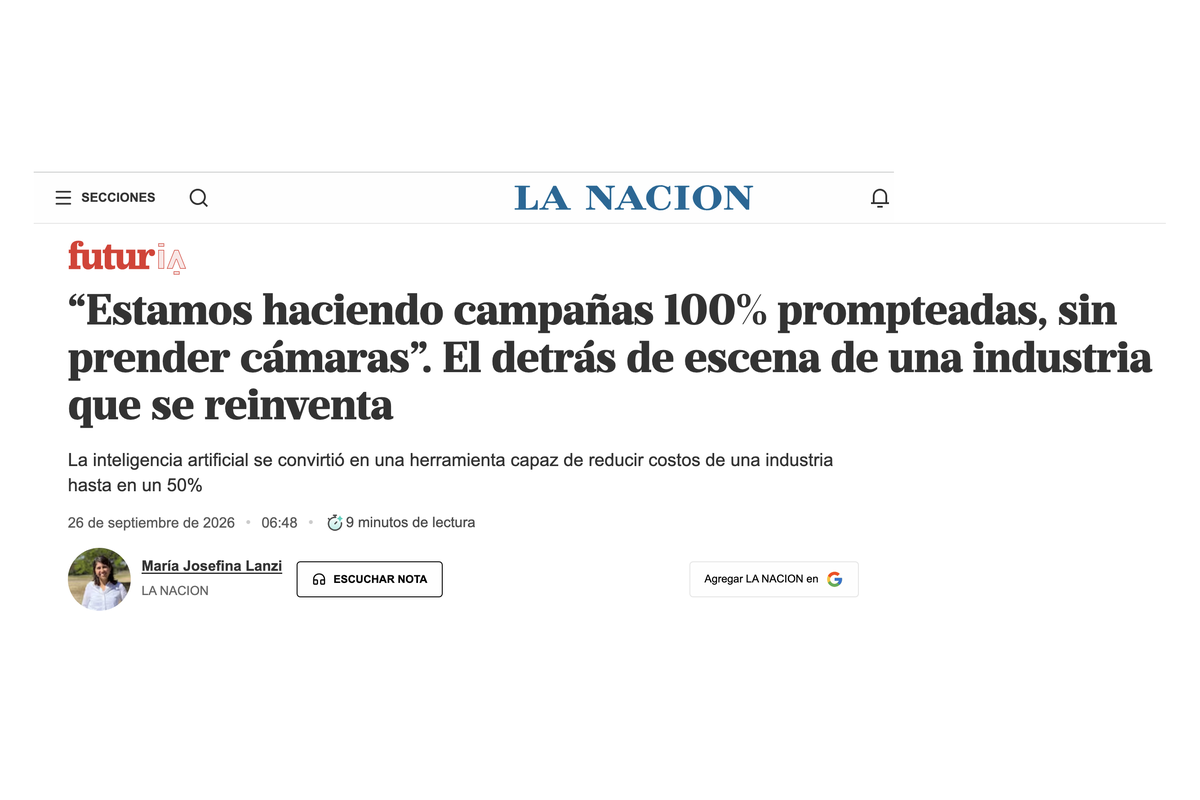
La Nación looked at how generative AI is changing advertising production in Argentina, and asked me what actually changes. My first answer was that it is not magic. A good final product still needs a director and a crew, maybe a smaller one, with real pre and post production. What has changed is everything before the shoot: days of storyboards and back and forth with the client now go much faster, and we can show twenty versions of an idea before choosing one to film.
Much of the content now is generated by one machine and read by another. When generating costs almost nothing, the bottleneck moves from producing to choosing. You can have fifty versions of an idea in ten minutes; the value is knowing which one works and why, and no tool settles that. It is the argument behind my talk on why clients still need an agency.
What I said
The interview was in Spanish. These are my translations of the four quotes La Nación ran, each with the article’s own lead-in.
Rafael Quijano of Don by Havas put AI productions at 40 to 50% cheaper, as long as the traditional roles are kept. The article noted that some warn of agencies going cheaper still by dropping those roles altogether, and quoted me on that:
“For the final product to be good, you need to hire a director and a crew, maybe a smaller one, but you still need pre and post production processes, and so on. It’s not magic.”
For those still producing ads the traditional way, it said, AI has also cut pre-production down a great deal:
“What used to be days of storyboards and back and forth with the client now gets resolved much faster. We can show twenty versions of an idea before deciding which one we shoot.”
It added my point that better decisions get made as a result, before anything is spent on a shoot, and that it makes room for variants that were not worth producing before, for different markets, formats and languages.
Looking ahead, after Matías Lafalla of GUT imagined agents working day and night on the less important decisions, I pictured a future where content is seen not only by people but also by machines:
“Today you already have ads, campaigns and articles generated by AI, and at the same time you have AI consuming that content. We are entering a moment where a good part of the content is generated by one machine and read by another.”
Several of the people interviewed agreed that AI will amplify people rather than replace them. Quijano pointed out that among identical AI promotions, the corner shop with a hand-lettered sign on cardboard still stands out. I agreed, and said which human skill becomes the priority:
“What takes center stage is judgment. When generating costs almost nothing, the bottleneck stops being producing and becomes choosing. Today you can have fifty versions of an idea in ten minutes; the value is in knowing which of the fifty works and why. The tool doesn’t solve that.”
All 54 posts
· see this in the story
Juan (John) Tubert is Chief Technology Officer at Tombras.