
Chatbot Innovation Featured in CIO Applications
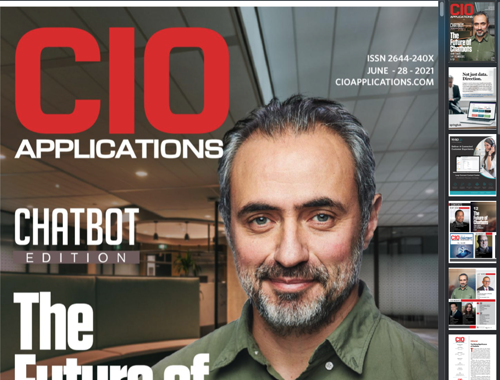
I wrote the cover story for CIO Applications’ Chatbot Edition in June 2021, on where chatbots were heading.
The argument was that they had stopped being scripted answer trees. Eliza, in 1966, could handle a few simple questions if you phrased them simply enough. By 2021 GPT-3 could produce text that was grammatically sound, and a bot could answer almost anything by reaching into a repository like Wikipedia instead of having its replies hardcoded. Google’s and Microsoft’s models had passed the human baseline of 89.8 on language understanding benchmarks, and the capability list had already run past understanding into translating, summarising, writing essays, writing code and generating images from a description. DALL-E had not shipped yet. I described it as the thing that would hand you a picture if you asked for a chair shaped like an avocado.
The prediction I would still make is that chatbots would take over a share of the cognitive load, so you would ask one rather than run a search. The part I have since watched arrive is the risk. I wrote about voice cloning and synthetic video as the technologies that would make these agents feel human, listed the detection tools that existed at the time, and pointed to a campaign we had made that put David Beckham into many languages for Malaria Must Die. Two years later I worked on DeepSteaks, which used the same technique to warn people about it.
All 54 posts
· see this in the story
Juan (John) Tubert is Chief Technology Officer at Tombras.